Walls Around the World

By: Kade Peterson

Walls and Their Purpose

Through the ages of time walls have been built for many reasons all around the world. Ancient walls were usually built for the purpose of protection and defensive purposes. During modern day times, they are built to keep citizens from escaping (Berlin Wall), to control citizens of the West Bank in Palestine, to prevent illegal immigration, transportation of illegal drugs, and terrorism. Overall, the purpose of walls are to either keep outsiders out or insiders in (Simon Worrall). However, are walls truly as effective and efficient as they are put out to be?

Walls of Jericho

During the times of Christ, it was very common for cities to have their entire border outlined by a city wall. Jericho (city from the Bible) is a great example of this. It is estimated that this great city had a wall built entirely around the city to protect the settlement from flood waters and attacks. The stone wall was about 11.8 feet high and 5.9 feet wide at the base. The city thrived for a long time until an earthquake broke down the walls. Following this event was the well-known battle of Jericho. Israelites stormed the city and captured the city (Art Ramos).

The Great Wall of China

The Great Wall of China was and is the world’s longest defensive fortification covering roughly over 13,000 miles. It is estimated that it took around 200 years to complete with the labor of about 1 million workers. While many people believe that the wall was built in the 200’s, the main wall that we now know of was built around 1400-1600. There is actually not much remaining of the original wall that dates back to the 200s. The wall was built to prevent invasion from the nomads in Mongolia. The wall did serve a great purpose during certain attacks from outsiders. However, despite its impressive length and structure, the wall ended up being useless when China was invaded by Manchus. It is said that they marched right through the entrance and overpowered the Ming as the Ruler of China.

The Berlin Wall

This great wall was built in the 1960’s following World War 2. Germany was divided into East Germany and West Germany. Berlin was located in the middle of East Germany. The German Democratic Republic built the wall to prevent emigration to West Berlin. The wall covered a 96-mile path dividing East Berlin from West Berlin. The wall is well known for the 12 feet high, thick and sturdy concrete wall. However, on top of that, this wall was equipped with another wall behind it, mines, about 300 watch towers, more than 250 guard dogs, 20 bunkers, and anti-vehicle trenches. Many people died trying to escape into freedom. However, 5,000 people were successful in getting past the wall. In 1989, when Eastern Germany and Western Germany became reunited once again, the Berlin Wall began to be torn down allowing access between the two divisions. Not much of the Berlin Wall remains today as the people have completely destroyed it.

Walls of Ston

These walls are about 4.3 miles long and were built for the purpose of defense in the 14th century. They completely surround the City of Ston which is located in the southern part of Croatia. These walls were commonly known as the European Wall of China given the fact that it is the largest fortress system in Europe. It also includs 40 watch towers. When It came to invaders, the Ston Walls stood strong and served their purpose preventing intrusion. They have stood strong until 1966 when a huge earthquake required repair and restoration to this great wall (“Walls of Stone”).

La Muralla

These walls are located on the beautiful island of Puerto Rico. It completely covers the island of an island city of San Juan. They were built by the Spanish Colonists in the 1600s and It took 200 years to be completely built. It reaches up to 42 feet tall and 45 feet thick at its base. This impressive wall has survived many attacks over the course of time including those from pirates, England, Netherlands, and America. Today Puerto Rico is part of the U.S.A. and people have done their best to restore the walls to their originality (Suzanne Van Atten).

Hadrian’s Wall

            This wall is 73 miles long, 10 feet thick and 16-20 feet tall. It is located at the northwest part of England and was built as a “defensive barrier from barbarian invaders” and to control emigration (David J. Breeze). Overall this wall served its purpose and is still intact today with many deletions.

The wall of the U.S./Mexico Borderlands

Donald Trump has plans to establish a wall across the 2,000 mile Mexican/United States border. His stated goal of this wall is to prevent illegal immigration into the United States given that he thinks it is a major problem for the country. He also claims the wall will stop the $150 billion drug trafficking that flows into the country every year. Ideas as to how it will turn out have changed overtime and there is no definite plan as to what will occur. The budget for the wall ranges from 8-67 billion dollars depending on the final decision.

Works Cited

Atten, Suzanne Van. “Puerto Rico’s Iconic City Wall: La Muralla.” Moon Travel Guides, 20 June 2018, moon.com/2016/01/puerto-ricos-iconic-la-muralla/.

Breeze, David J. “Hadrian’s Wall.” Encyclopædia Britannica, Encyclopædia Britannica, Inc., 11 Apr. 2018, http://www.britannica.com/topic/Hadrians-Wall.

Editors, History.com. “Berlin Wall.” History.com, A&E Television Networks, 15 Dec. 2009, http://www.history.com/topics/cold-war/berlin-wall.

Mark, Emily. “Great Wall of China.” Ancient History Encyclopedia, Ancient History Encyclopedia, 28 Apr. 2019, www.ancient.eu/Great_Wall_of_China/.

Ramos, Art. “Early Jericho.” Ancient History Encyclopedia, Ancient History Encyclopedia, 28 Apr. 2019, http://www.ancient.eu/article/951/early-jericho/.

“Walls of Ston.” Atlas Obscura, Atlas Obscura, 21 July 2011, http://www.atlasobscura.com/places/walls-of-ston.

Worrall, Simon. “Building Walls May Have Allowed Civilization to Flourish.” Why Humans Build Walls to Keep People out-or In, 5 Oct. 2018, www.nationalgeographic.com/science/2018/10/wall-mexico-trump-book-talk-news/.


A Historical and Comparative Analysis of the US-Mexican Border, Part Two: A Closed Border

by Tanner Wilcox

The United States had an open border with Mexico for the longest time, that is until 1924 when the Immigration Act and the Border Patrol were set in place, making it so after certain quotas were met immigration was limited. These were not necessarily directed at Mexico, but it was issued toward all foreign nations. In a way, the United States said, “we are closing ourselves off just a little bit, so to preserve what we have now, and to ensure our affairs are in order.”

The United States has never been a “closed-border country” before, but it has regulated its borders substantially[1].  Closed countries have shown many different consequences. Examples I pulled from include the countries of Japan and now North and South Korea.

I chose these because they show that if the United States were ever to close the borders with Mexico, for whatever time length it may be, it would need to be under the “right” circumstances.

Both the Japanese and Korean cultures have been affected like the United States has been affected by war, annexation, border control, and so on.  What we currently see is a freely traveled America and Mexico, and a freely traveled Japan and South Korea. We also see the most mysterious and absolutely closed North Korea. But Japan was once closed too, and it didn’t mean the loss of all freedoms either.There are many different consequences of closing a country. If, and only if, the country is under the right circumstances and with the right intentions should a country be closed.[2]

In Japan’s early history the country was at war with itself much of the time, but when 1639 came the Shogun – Japanese Military Leaders; not the Emperor – united all of the feudal lords or “shogunate” to ensure they had full control over the people (Encyclopædia Britannica, Inc.). This made it easy to simply close the country. No one was allowed in or out, except on official government business, for trade with Korea, China, or the Dutch East India Company, an offense punishable by death. However, at this time Japan’s population had been on a decline due to the constant feudal disputes between prefectures, food was slim, and people had not trusted each other. The Shogun were strict, so strict that when he closed the country, he also outlawed all prefectural and feudal usage of the military for internal skirmishes over land and rule. This caused the population to increase drastically; nearly doubling from the estimated 18 million citizens to nearly 31 million (Hayami).

Not only that but because of such raw population growth, they began to trust each other once again. That allowed for more businesses to be started, books to be published causing literacy and education to rise sharply, roads were built across the country making it more accessible to the commonwealth. This lasted for more than 250 years before the United States actually showed up in 1853 on their front door issuing an order to open the country. Since there really was not much that they could do about it, they opened it to select countries that would be good to do business with. Also, though, the United States was allowed to visit Japan any time they wanted and trade with local business as part of the “Treaty of Amity and Commerce” they signed in 1858 (Harris).

As Japan does not have a land border with any country, only during the winter sometimes when there would be an ice-bridge naturally formed between Japan and Russia, they did not really have any border regulation outside of the ports that were common landing areas for foreigners.This made it interesting as they would never really erect a physical barrier to stop people from coming into the country “illegally,” the only force keeping the Japanese in and foreigners out were the military (Encyclopedia).

With a United States equivalent of such an attempt would be what we are seeing today, and what we have seen in the first attempt by the Bush administration with the “Secure Fence Act of 2006.”  The United States under President Bush’s orders would begin the fencing between the United States and Mexico. Ultimately it was never finished due to budget costs, and how unproductive it was seen as from the beginning by other lawmakers. Up until now the border patrol has had the help of the fence and some walls until today, but not across the entire border. This has not been accomplished yet (Congress).

According to Japan’s fine example of preserving people’s lives, improving the job market, education, and life span of its people, closing the country may have wonderful consequences. Yet there is another example of a closed country that shows potential for greater problems.

Now divided North and South Korea, was once under Japanese rule.  Japan had annexed Korea shortly before the first world war and would continue to rule over the country from 1894, officially 1910[3], until the end of World War II in 1945 (Blakemore). When both the 2nd World War and Korean Wars were over the United States and the Soviet Union would help establish the Demilitarized Zone across the 38th parallel of the world. The United States taking control with the South and the Soviet-supported Koreans taking the Northern sector.

This would now show us what it means to have a closed country under “wrong” circumstances. The wrong circumstances would be communism or dictatorship which the North has been under the rule of ever since. There weren’t any real basic freedoms like there were in pre-WWII Japanese eras. In an article issued by the Telegraph written by Mike Wright and David Urban they formally laid out the issues of the closed and impoverished country which people try to flee constantly. There is no freedom of movement in or out of the country, there is no private business sector, there is no non-state-approved media availability, interracial relationships, and the list goes on (Wright).

If the United States were to adopt a closed border policy, it could in no way be like this, or like the past closed border policies of Japan either for that matter.  Though it was not nearly as extreme, it is not moral. Closing the border in the South would have to be different. There is no restriction of free trade with Mexico but closing the border would definitely hurt it.


What it comes down to:


Looking at the consequences of having open borders and closed borders, there are both many good and many bad things that could happen. This is why the United States has a regulated border with Mexico. Closing it could hurt both parties, opening it could hurt both parties.

We’ve seen that when the border is open skilled workers tend to flock to a more prosperous country and that both hurts and helps the economy both parties. It means more skilled workers here, and less in Mexico. It means there is a higher availability for cheap labor, but also a higher rate of expenditure of our resources. It means there are more people and more jobs, but it doesn’t necessarily mean that there are good jobs. It could lead to prosperity not previously known, or a downfall hitherto unimagined.

We’ve also seen the effects of closing the country off completely to some countries: In the “right” environment it means that the local businesses have a bigger chance to capitalize on their investments, and better jobs are available in the country. It means the expenditure of resources goes down, dropping the cost of living in such a country, and enabling people to become more highly educated. It also gives rise to power and individual gain or destruction like we have seen in North Korea.

The ultimate question is what kind of a people do you want to become? President Thomas Jefferson, one of the founding fathers once said: “The care of human life and happiness and not their destruction is the first and only legitimate object of good government” (Jefferson).

A good government looks out for its people first and then looks to other nations next. In John Locke’s natural rights, we all have the right to life, liberty, and property. In the founding fathers’ unalienable rights, we all have the right to life, liberty, and the pursuit of happiness.  If happiness and life are the first things our government is to seek out for us, then what is the answer at any given time?  That’s for us to decide. Will building a wall at the border create a barrier that will enable us or derail us of our vision of a prosperous America? What kind of people do you want to become, and how do we get there in one piece?


Works Cited

Blakemore, Erin. History.com – How Japan Took Control of Korea. 29 August 2018. Monday 29 April.

Congress, 109th. congress.gov. 26 October 2006. 27 April 2019.

Encyclopædia Britannica, Inc. Tokugawa Period (Edo Period). 20 July 1998. 27 April 2019.

Encyclopedia, New World. Edo Period. 25 September 2017. 26 April 2019.

Harris, Townsend. Library of Congress, Amity and Commerce. 29 July 1858. 27 April 2019.

Hayami, A. “Populations in Tokugawa Japan: 1600-1868.” Population, Family, and Society in Pre-Modern Japan. Global Oriental, 2010. 99-100.

Jefferson, Thomas. National Archives, Founders Online. 31 March 1809. 27 April 2019.

Museum, Victoria and Albert. The Edo Period in Japanese History. 2016. 26 April 2019.

Wright, Urban. The Telegraph – Brutal and inhumane laws North Koreans are forced to live under. 19 September 2017. 29 April 2019.


[1]See border regulations on “How to Enter the U.S.,” site: Usa.gov

[2]Personal opinion later backed by evidence.

[3]Official year of annexation.

A Historical and Comparative Analysis of the US-Mexican Border Part One: An Open Border

by Tanner Wilcox

Ever since the Immigration Act of 1924[1]was put into place, the United States of America has had a more strictly regulated border, not with just Mexico, but with every country. Prior to that, the border was far more relaxed, bordering open borders. In contrast to how it is currently tightly regulated, many people have called for an open border policy while others have called for a closed one. To understand further what the outcomes could even be, a comparative analysis of closed and open borders both past and present is needed to assess the U.S.-Mexico border.


An Open Border in the South:


What are the consequences of having an open border as we see currently with other countries and their history? Consequences, as in having a direct effect on the country and their people, not necessarily a positive or negative effect, but an effect.

One of the consequences of having open borders, or even less strict immigration laws for that matter, is having more people freely enter the country with the intent to make a life for themselves. It also involves the higher and faster expenditure of resources, the potential for more jobs, and a greater diversity of races.

Currently, the United States has more than 350 million people legally crossing the Southern border every year (Taylor). (Bureau)It is the most crossed international boundary in the entire world on a yearly basis.  Furthermore, the number of immigrantsthat cross that border vary, but on average every 33 seconds a new migrant comes into the United States, making for more than 956 thousand people yearly immigrating to the United States (Bureau). These are people that have the correct documents such as passports, visas, permanent residence cards, and so on. Historically, however, when you look at the early years of the United States of America, before the 1880s, the borders were open to immigrants, but tightly regulated for naturalization. So, citizens of different countries were allowed to immigrate to the US, but naturalization was given only to those who met, what would now be considered unacceptable requirements.  It required that you be a white-male who demonstrated good moral character. This has, for obvious reasons, changed for the better here in the United States. Though the naturalization process still has extensive requirements, it no longer requires that you are white or necessarily a “morally” good person (Smith).

During those early years, the population influx was drastic. Right now, we don’t usually get more than a million[2]immigrants yearly for the majority of the time, but even way back in 1907 when the US was just getting its foot in the door of border regulations there was a peak of 1.37 million immigrants in a single year (Editors). And this was a time when there were only an estimated 1.6 billion people on the Earth (Worldometers)[3].  The equivalent ratio today would be 6.6 million immigrants in a year.  Meaning that 1 out of every 49 people in this country would be an immigrant if we were only counting that particular year at a fixed current population of 327 million citizens.

As we have never had such a rise in immigration since the United States began regulating its borders, it is safe to say that when the borders were open there were a greater number of people immigrating to our country.


Concerning the Mexican border however, the United States would only really begin monitoring the border starting in 1910 when the Mexican Revolution broke out. It was also only to make sure that the fighting did not spill over into the United States, for concern of our citizens (Little).

Different countries have different policies with open borders. Take many countries in Europe for example. A majority of which are part of the same “Schengen Agreement.”

Ever since 1985 but traditionally back through the middle ages, the following European countries have agreed on a “free and unrestricted movement of people,” and abolished their internal-international borders: Austria, Belgium, Czech Republic, Denmark, Estonia, Finland, France, Germany, Greece, Hungary, Iceland, Italy, Latvia, Liechtenstein, Lithuania, Luxembourg, Malta, Netherlands, Norway, Poland, Portugal, Slovakia, Slovenia, Spain, Sweden, and Switzerland (Schengenvisainfo.com).

Before World War I there were no official border restrictions, quotas, or issues with free migration in Europe. After World War II the European countries began to recover quickly. They decided that since not any country was affected alone, and not any single country had enough skilled workers such as engineers, doctors, architects, accountants, etc. to put their own economy back together. They pulled their resources and people together and formed the European Economic Community (EEC) (Koikkalainen). That would later become the European Union. They through common interests, shared resources, and the free movement of people would achieve much.

The consequences these countries have experienced would include the change of emigration of people in the individual countries to the immigration of other citizens to their close-knit society (Koikkalainen).  More people would intend to stay, the potential for finding work would soar, and the diversity of the individual countries would adapt to a newer multi-cultural society rather than simply one predominant race and a few other minority races. An open border in the South would have similar consequences where we have not only seen less previous prosperity, but where we already have such an abundance of prosperity here, it could change literally everything about our country’s composition.  It is interesting indeed.


Works Cited

Bureau, United States Census. U.S. and World Population Clock. 1 May 2019. 4 April 2019. <https://www.census.gov/popclock/&gt;.

Editors, History.com. U.S. Immigration Before 1965. 15 April 2019. History.com. 25 April 2019. <https://www.history.com/topics/immigration/u-s-immigration-before-1965&gt;.

Koikkalainen, Saara. Free Movement in Europe: Past and Present. 21 April 2011. 16 April 2019.

Little, Becky. The Violent History of the U.S.-Mexican Border, History.com. 14 March 2019. 12 April 2019.

Schengenvisainfo.com. Schengen Area. 18 January 2019. 12 April 2019.

Smith, Marian L. Race, Nationality, and Reality. 2002. National Archives. 15 April 2019. <https://www.archives.gov/publications/prologue/2002/summer/immigration-law-1.html&gt;.

Worldometers. World Population by Year. 2017. 4 April 2019.


[1]See Office of the Historian website: The Immigration act of 1924 (Johnson-Reed Act)

[2]See (Bureau) source.

[3]See also World Population Growth – by Max Roser and Esteban Ortiz-Ospina.

Maquiladoras and The Wall

By: Kade Peterson


In 1966 a new program was released known as the maquiladora program.  The Mexican government was responsible for establishing this program which allowed duty-free importation of raw-materials and other goods. (White) The way it works is an American business would build a factory just south of the border of The United States and Mexico and hire workers from Mexico to do the labor and work at the factory. While being beneficial to both countries, these are a few reasons why it is beneficial to The United States:

  • Allowed businesses to increase profit margins by hiring workers at a price much lower than minimum wage.
  • Eliminated extreme shipping costs from other countries such as China, Pakistan, India, Etc.
  • Materials, goods, assembly components, and production equipment are allowed to enter Mexico duty-free.
  • Products can be imported into the U.S. at lower tariffs than any other country because the factories are located on the border.

Not only that, but it is also beneficial to Mexico for the following reasons:

  • Industrialize northern Mexico.
  • Provide jobs for over a million Mexican citizens. (Stephanie Navarro)
  • Creating jobs along the border which will slow down immigration
  • Helps the economy

Progression of the maquiladora and NAFTA

Since the beginning of maquiladoras until now, this program has not  slowed down. More and more factories are being built providing more jobs, and new opportunities. In 1985, maquiladoras overtook tourism as the largest source of foreign exchange, and since 1996 they have been the second largest industry in Mexico behind the petroleum industry(Louie Yoon 69). In 1994, this program began to truly flourish when the North American Free Trade Agreement (NAFTA) was approved. NAFTA is the world’s largest free trade agreement and consists of 2,000 pages, with eight sections, and 22 chapters discussing certain agreements in regard to trade between Canada, Mexico, and the United States. A few examples of what this agreement states are the following:

  • Enforces equality between the three countries and “grants the most-favored-nation status to all co-signers” (Kimberly Amadeo).
  • Completely eliminates tariffs on imports and exports.
  • Requires exporters to get certificates of Origin to waive tariffs.
  • Forces countries to respect all patents, copyrights, and trademarks.
  • Allows easy access for business travelers to each country (Amadeo).

NAFTA increases investment opportunities and allows growth in the economy from all three countries. Between the three countries its growth domestic product is over 20 trillion dollars.

Cons of the Maquiladoras

            Despite the fact that maquiladoras provide jobs for over a million people, there can be many negative effects. Many workers suffer from working too much and still not making enough to provide for themselves/families. As well, in certain areas, many workers suffer from abuse, sexual harassment, illness, improper training, etc. As good as it may seem to business owners, maquiladoras can be very detrimental and harmful to people when not run correctly. Another negative side effect is due to “loosely enforced Mexican environmental laws and a lack of suitable waste storage and treatment facilities, cause the border area to be among the most polluted in Mexico” (Elyse Bolterstein). It’s super important that businesses can be aware of these affects so changes can be made.

Trump and the “New” NAFTA

While many are in disagreement, Donald Trump stated that NAFTA was “the worst trade deal that America has ever signed.” Revisions were made in September of 2018. With only a few minor revisions and the main core of the deal remaining in place, NAFTA is now known as USMCA, which stands for United States-Mexico-Canada Agreement. The changes aren’t substantial and will not be enforced until 2020. This is so important because Mexico is the United States second largest export market and the United States is Mexico’s first.

The Wall

With Trump’s plans to build a wall across the Mexican border, a huge concern is brought up with how that would affect the economy of each nation. One thing that is concerning is the future of maquiladoras. How would businesses be able to access and transport goods effectively when there is a huge wall that stands between the two countries and officials and funds are taken from regulating border crossings to defend the wall and its aims? How would they make it work in a timely manner and cost-effectively? Maquiladoras have huge impact on the Mexican economy just as much as the American. “The effect of a trade war with Mexico would cascade beyond lost jobs in the U.S. plants. Downtown stores would lose business, lay off workers and close up shop. Mexican investors would likely sell off their U.S. properties, leading to plummeting real estate values” (Tracy). The relationship that the United States has with Mexico is very important to our thriving and growing economy. “The economic livelihood of these communities is on the line if the relationship with Mexico is not managed in a cooperative way,” said Chris Wilson, deputy director of the Mexico Institute at the Woodrow Wilson International Center for Scholars. “Their commerce with Mexico is their lifeblood. Anything putting those trade relationships at risk puts their communities at risk.” (Tracy). Another huge problem would be the cities close to the border that depend on visitors from Mexico. They are dependent upon serving them and if a wall was built that indirectly slows border crossings, tons of businesses will have to file for bankruptcy because there won’t be enough customers.

Outcome

            Because the program of maquiladoras has thrived for the past 60 years, its roots are firmly planted, and many people completely rely on it. If the wall is built separating the two countries, changes will need to be made and fewer options will be available. Millions of lives will be impacted in regard to those involved in the maquiladora program. Business owners could find new manufacturers in different countries and deal with the tariffs. They could find new employees or build new factories which would cost them a lot of money. However, in the end, it is inevitable that many people will lose jobs and many businesses will fail due to the wall on the Mexican border of the United States.


Works Cited

Amadeo, Kimberly. “6 Things NAFTA Does.” The Balance, www.thebalance.com/nafta-definition-north-american-free-trade-agreement-3306147.

Bolterstein, Elyse. “Environmental Justice Case Study:” Environmental Justice Case Study: Maquiladoras, umich.edu/~snre492/Jones/maquiladora.htm.

Jan, Tracy. “How Trump’s Immigration and Trade Policies Could Hurt Border Town Economies.” The Washington Post, WP Company, 26 Jan. 2017, http://www.washingtonpost.com/news/wonk/wp/2017/01/26/how-trumps-immigration-and-trade-policies-could-hurt-border-town-economies/?noredirect=on&utm_term=.3e3ae8e69d89.

Louie, Miriam Ching Yoon. Sweatshop Warriors: Immigrant Women Workers Take on the Global Factory. South End Press, 2001.

Navarro, Stephanie. “Inside Mexico’s Maquiladoras: Manufacturing Health Disparities.” Studylib.net, studylib.net/doc/8202540/inside-mexico-s-maquiladoras–manufacturing-health-dispar.

“What Is a Maquiladora in Mexico?” Manufacturing in Mexico, manufacturinginmexico.org/maquiladora-in-mexico/.

White, Mike. “NAFTA and the Maquiladora Program.” Team NAFTA, Team NAFTA, 18 Apr. 2016, teamnafta.com/manufacturing-resources-pages/2016/4/18/nafta-and-the-maquiladora-program.


Walls


What are walls meant to be about

Are they to keep people in, or keep them out?


Do they draw a line between racial divides

Or help us keep laws we are meant to abide?


Are they obstacles we cross to get away from oppression

Or are walls built to avoid economic recession?


Does it really decide who I am

Or simply act as a human dam?


Would things be better if they weren’t the way they are

Or is it easier to throw people in the back of cop car?


If we all lived in peace would we even need a wall

And just like Berlin, we could watch them all fall?


So what are these walls really all about?

It’s definitely something we need to figure out.


-Jaelyn and Austin Moyes


The U.S. / Mexican Border: A History

by Aubrey Taylor

The Beginning

1

(Image of the current Mexican-U.S. Border)

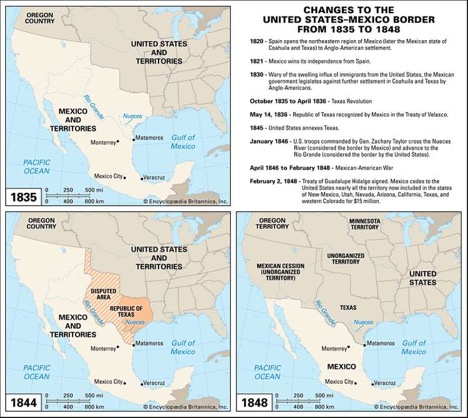
The U.S.-Mexican border that we are familiar with today is nearly 2,000 miles long, bordering along the south of California, Arizona, New Mexico, and Texas. However, this current area wasn’t always the border. The territory of Mexico once included most of Western U.S. and was owned by Spain (About the Border). So, how did present-day Mexico come to be? Initially, it started in the year 1492, with a man name Christopher Columbus.

People are well aware of the great discovery of the Americas in 1492. Ever since this land was exposed to the Eastern World, it was a race to claim the land and its significant desired goods. One of the more noteworthy countries to conquer the Americas was Spain. The commencement of Spanish colonization began with the conquering of Spaniard Hernán Cortés in 1519. Having had formed many allies, Cortés attacked the indigenous civilizations and conquered the Aztecs in May 1521. Following the Spanish victory, Cortés colonized and named the area Nueva España, translated as New Spain. By 1574, Spain had control over a vast percentage of the Aztec empire and enslaved the native people. Skip a couple centuries to the year 1808, and success began to drop. Napoleón Bonaparte invaded Spain which compromised the political and economic structure. This action weakened Spain’s grip on Nueva España.

September 16, 1810, a call of rebellion was disseminated by Miguel Hidalgo y Costilla. This call was answered when, Vicentte Guerrero and Agustín de Itúrbide drafted a Mexican constitution allowing for Mexico to gain independence from Spain in 1821. Later in 1822, Itúrbide professed himself as emperor. Just one year later, Itúrbide was overthrown and Antonio López de Santa Anna created a new constitution and established a federal Mexican republic consisting of 19 states and four territories. Between the years 1823-1836, Santa Anna functioned as president and was later defeated by American forces during the Mexican-American War (History of Mexico).

During the year 1844, James K. Polk won the U.S. Presidential election with the pledge to fulfill America’s “Manifest Destiny”. The “manifest destiny” began with the seizing of Texas in 1845, fading Mexico’s relations with the United States. After the Mexican refusal of $30 million dollars from the U.S. for California and New Mexico, Polk sent 4,000 troops to Texas, and shortly thereafter a Mexican attack on these troops triggered the United States to declare war on Mexico. April 25, 1846 marked the start of the Mexican-American War. Eventually, after many grim battles, the Mexican capital was apprehended in September 1847 by the United States(About the Border).

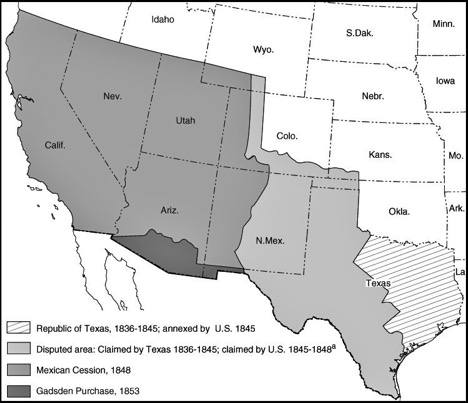
The Mexican-American War officially ended February 2, 1848 with the signing of the Treaty of Guadalupe Hidalgo. This treaty transferred 525,000 square miles (approximately 55 percent) of Mexico’s territory to the United States. This territory included land that is present-day New Mexico, Arizona, California, and land north of those states. Under the Treaty of Guadalupe Hidalgo Mexico also formally gave up claims of Texas and recognized the Rio Grande as America’s southern boundary, which happens to be nearly the same as the present-day southern U.S. border (Treaty of Guadalupe Hidalgoand U.S.-Mexico Border).

2

(Border Changes)

In an attempt to resolve conflicts that lingered after the Mexican-American War, four years later on June 8, 1854, the Gadsden Purchase was finalized and signed. This purchase resulted in the United States paying Mexico $10 million for a 29,670 square mile portion of Mexican territory that later became the southern part of Arizona and New Mexico. Despite its failure to solve tension and border attacks, it did, however, create the current Mexico-U.S. border  (Gadsden Purchase).

3

(Treaty)

The Mexican-American border was a three-century border in the making. From the beginning of Spanish conquest in the Americas, to the Independence of Mexico, to the Mexican-American War, to establishing the present-day border, citizens along the border have had an interesting history of success, hardships, and loss. Nevertheless, this history is what made the border and these countries and these peoples what they are today.


Works Cited

Klein, C. (2018, April 17). Everything You Need to Know About the Mexico-United States Border. Retrieved from https://www.history.com/news/everything-you-need-to-know-about-the-mexico-united-states-border

Editors, H. (2009, November 09). History of Mexico. Retrieved from https://www.history.com/topics/mexico/history-of-mexico

Editors, H. (2009, November 09). Treaty of Guadalupe Hidalgo. Retrieved from https://www.history.com/topics/mexican-american-war/treaty-of-guadalupe-hidalgo

Little, B. (2018, April 09). The Violent History of the U.S.-Mexico Border. Retrieved from https://www.history.com/news/mexico-border-wall-military-facts

Wallenfeldt, J. (n.d.). How the Border Between the United States and Mexico Was Established. Retrieved from https://www.britannica.com/story/how-the-border-between-the-united-states-and-mexico-was-established

Office of the Historian. (n.d.). Gadsden Purchase, 1853-1854. Retrieved from https://history.state.gov/milestones/1830-1860/gadsden-purchase

Oliver, P. (2017, July 12). What the Treaty of Guadalupe Hidalgo Actually Says. Retrieved from https://www.ssc.wisc.edu/soc/racepoliticsjustice/2017/07/12/what-the-treaty-of-guadalupe-actually-says/


Borderlands / La Frontera

cover

A section from Lyn Bennett’s and my book A Perfect Fence:


Borderlands_La_Frontera_(Anzaldua_book)


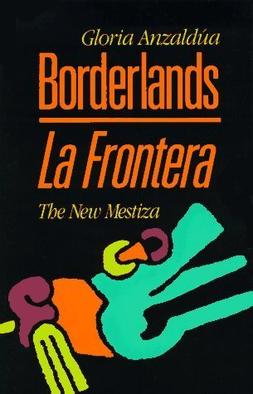
In her influential 1987 meditation on Borderlands/La Frontera, Gloria Anzaldúa explores ideas of identity in an extraordinary “in-between space” or interstice. She defines herself as the new mestiza, a creature of the dangerous borderlands between the United States and Mexico. Between genres (poetry, essay, history, memoir), between languages (English and various forms of Spanish), between cultures (Indian, Mexican, white), Anzaldúa chooses barbed wire as a metaphor for where and how she lives in the borderlands.


I press my hand to the steel curtain –

chainlink fence crowned with rolled barbed wire—

rippling from the sea where Tijuana touches San Diego

unrolling over mountains

and plains

and deserts,

this “Tortilla Curtain” turning into el rio Grande

flowing down to the flatlands

of the Magic Valley of South Texas

its mouth emptying into the Gulf.


1,950 mile-long open wound

dividing a pueblo, a culture,

running down the length of my body,

staking fence rods in my flesh,

splits me     splits me

me raja     me raja


This is my home

this thin edge of

barbwire.


The barbed wire that stretches from the Pacific Ocean to the Gulf of Mexico is a tool of oppression, rusted witness to the years since the U.S. took over vast stretches of Mexico at the end of the Mexican-American War.The idea of the thin edge of barbed wire that stakes and splits flesh as home is unthinkable. Anzaldúa thinks it, teases out the implications, embraces the fence that splits her. She moves from poetry to prose to think about border identities:

The U.S.-Mexican border es una herida abiertawhere the Third World grates against the first and bleeds. And before a scab forms it hemorrhages again, the lifeblood of two worlds merging to form a third country—a border culture. Borders are set up to define the places that are safe and unsafe, to distinguish usfrom them. A border is a dividing line, a narrow strip along a steep edge. A borderland is a vague and undetermined place created by the emotional residue of an unnatural boundary. It is in a constant state of transition. The prohibited and forbidden are its inhabitants. Los atravesadoslive here: the squint-eyed, the perverse, the queer, the troublesome, the mongrel, the mulato, the half-breed, the half dead; in short, those who cross over, pass over, or go through the confines of the “normal.”


If borders are set up to divide us from them, and if she refuses that separation, then Anzaldúa must inhabit the border. She must claim the very machinery of violence that establishes the border. If the barbed wire is her home, she becomes dangerous rather than endangered. This new myth is hybrid, powerful, and affirming. The barbed wire has split me? Then I am the barbed wire fence.

But (and the poem approaches its end with a “but”) fences that rip a person and a pueblo apart ought themselves to be blown down; and for this the old myth is ready with the goddess of the ocean who punishes the arrogance of the white man who has strung the barbed wire.

But the skin of the earth is seamless.

The sea cannot be fenced,

El mardoes not stop at borders.

To show the white man what she thought of his

Arrogance,

Yemayá blew that wire fence down.

Barbed wire enclosed the territories of Native migration and shared resources just as surely as it enclosed the free range. Barbed wire takes its place in Native American and mestizatexts as an actual and metaphorical definer and destroyer of cultures, separating us and them, enforcing boundaries through hegemonic stories, and, positively, establishing boundaries that invite courageous and creative hybrid responses.


By the Lake of Sleeping Children

By the Lake of Sleeping Children: A Review

By Hayley Lopez

lake

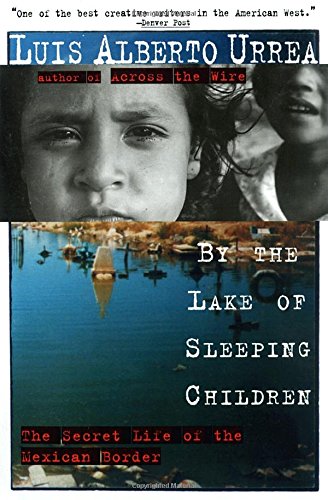
By the Lake of Sleeping Children starts when the author, Luis Alberto Urrea, is born as an American citizen near a Mexican drugstore in Tijuana. He describes himself having blue eyes and he spoke Spanish in his parents’ home before he spoke English. The author describes his father as a blond Mexican who was part of the secret-police force and also an army captain who held “a badge of the dreaded federal judicial branch of Mexican law enforcement” (3). The author’s mother is an American and was part of the red cross in WWII. The author describes how his mother went from white gloves to dirt streets and from Tiffany’s jewelry to contaminated medical instruments while having a cesarean-section delivery of the author. His father raised the boy to be 100% Mexican and also decided not to speak English with his son, and his mother raised him to be 100% American (4). The author explains how he has felt like the border between his two parents. He writes, “I have a barbed-wire fence neatly bisecting my heart” (4).

I was intrigued by how the author described his life as part citizen and part outsider. My husband is 1/4 Mexican and my last name is Lopez. I do not look Mexican, but many people tell me that I should not have changed my last name. When I need to talk to a representative on the phone, I am transferred to someone who speaks Spanish and broken English. I am frustrated most of the time. I cannot help but feel like I am half of an outsider as well because of my last name.

Urrea wanted to become a famous writer, but he spent most of his time on the Mexican and American border feeding the hungry and “bathing the feet of beggars” (4). The author tells the reader why Mexicans keep crossing the border into the United States—Money! It is because the United States has money to spend on the next new shiny car, taking trips to Disneyland, drinkingas much alcohol and eating as much food as anyone wants, and the people in the United States have freedom that Mexicans can only dream of. Urrea says that the United States represents for the whole world how to have fun and have lots of money to enjoy life (10). The author goes on about what all Americans have to enjoy, and he points out the what happens if they cannot get past the line: “if they don’t get in the gates, their babies might very well die of starvations, disease, or misadventure. What choice would you make?” (11). Now that I am pregnant with my first child, I know for a fact that I would do anything to make sure my unborn child is safe from any ailment. Parent instincts are very powerful to see that their offspring have a much better and fulfilling life than their own.

Once people start having babies, it is hard not to want a better life for them. Urrea goes on to tell the reader that the only thing Democrats and Republicans can agree on with third world countries is that if you cannot feed your baby, then you should stop having them. Urrea is very harsh in his explanation about how the absolute poorest Mexicans have no health insurance, no money, and no welfare. However, this does not prevent these deprived people from having children. Mexicans actually have more children because the children are insurance and social security. The children are who take care of them when the parents get older (13).

Urrea bluntly states that if the American government wanted no more immigration, then the border would be sealed tight as a jar of jam. Nevertheless, Americans do not want to spend outrageous prices for fruits and vegetables or clothing items (15). We are letting Mexicans come through the border into the United States because we do not want to work as hard as Mexicans do every single day. After reading just a few pages into By the Lake of Sleeping Children, I did not realize how selfish, greedy, and lazy Americans are with work. I am grateful for low prices on food while studying for my degree, but I wonder if I am willing to get down and dirty with hard labor.

Urrea claims that this is not a political book or a religious book or even a sociological text; he wrote this book by living and walking with the Mexicans on the border. He paints a shockingly vivid picture of what life is like for the old and the young. The constant struggle for survival to the next day. Urrea writes about the border for the voices who are not heard by Mexico or by the United States—he gives them a voice with his books, hoping that one day someone will want to learn about these peoples’ lives. He wants the readers to understand that this book will be hard to read. Urrea is just trying to show how poor these humans are.

Tijuana is the border city below South California. Urrea is astonished by how the city keeps throwing him surprises at every turn. The author somehow finds himself giving other people tours of the Mexicans’ poverty in Tijuana (37). “We go to some shacks, maybe stop at an orphanage or two, gobble fish tacos at Tacos El Paisano, then gird ourselves for the Tijuana dump. Everybody loves the dump—cameras fly out of purses, and wanderers walk into the trash, furtively glancing at me over their shoulders so they can be sure they’re not really in danger” (37).

I put down the book and wonder if I had ever gone somewhere and taken advantage of documenting someone’s else life knowing that I have it better than they will ever get to experience? Right now, I feel sick to my stomach by how people press their ugly faces into these poor people’s lives to validate tothemselves that they have it so much better than these poor humans.

Picture2

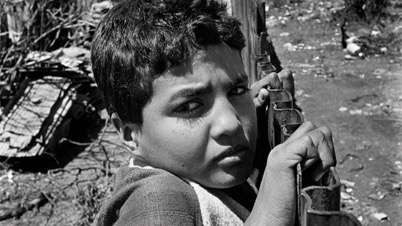
Figure 1: Google Images—Mexican boy looking over a fence.

Picture3

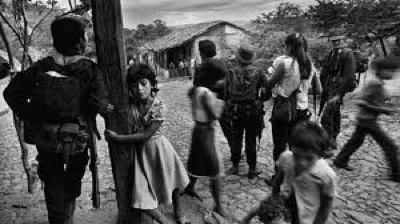
Figure 2: Google Images—Photographer Donna De Cesare spent decades amid brutal conflict, refugees, and violent gangs.

The author remembers taking his group of tourists to the lake of sleeping children, not really a lake but more of a pond. The smell seeps into the pores of his and the tourists’ skin. These sentences have frozen me to the core: “They were waking up. They were sitting up. The filthy water was cascading out of their eye sockets. They opened their mouths to call my names, and black water jetted out, like fountains. And, my God, they wanted to play with me” (38). I became physically sick at the words Urrea uses to describe the horror of these poor little human lives. I imagined these poor Mexican children are still wanting to have joy in their lives and pretend that life is better than this. I really am having a hard time reading this book, but I know that I am uneducated on how the Mexican’s lives are affected by their own country and by the United States.

Work Cited

Urrea, Luis Alberto. By the Lake of Sleeping Children. First Anchor Books Edition, 1997.


Religion and Immigration

coexist-black-motivational-plastic-sign_a-G-10255428-9201595


by Jaelyn Peterson

In January of 2017 Donald Trump was inaugurated as the 45thPresident of the United States of America.  President Trump’s opinions and policies have been polarizing and very controversial for the citizens of the United States.  One of those controversial topics is immigration, specifically at the United States/Mexico border.  President Trump’s immigration policy stresses his black-and-white perspective, placing emphasis on the criminal nature of illegal immigrants. Therefore, President Trump is determined to build a wall on the United States/Mexico border for increased security against illegal immigrants, making it harder to find illegal refuge in the United States of America.   This issue has had a lot of media coverage and continues to cause contention among people. This topic is very important to the many people residing in the United States and around the world.  Similarly, religion is also an important aspect to many Americans.  Whether you believe in President Trump’s policies or not, I found it very interesting to research what major religious sects believe about immigration in general. I specifically researched immigration beliefs of these religious groups: Atheists, Muslims, Jewish tradition, members of The Church of Jesus Christ of Latter-Day Saints, and Catholics. Although I do not wish to influence any personal beliefs on immigration I would like to educate on beliefs of major world-wide religions and provoke thoughts regarding current immigration policies and trends.

Deferred Action for Childhood Arrivals, also known as DACA, is an immigration policy concerning children.  This policy enables unlawful adults in the United States to be eligible for various things to prevent deportation after being brought into the country as children.  President Donald Trump stopped the ongoing of the DACA policy.  The American Atheist group published an official statement by the President of the American Atheists, David Silverman, regarding the DACA: “this is about more than politics. This is about recognizing our shared humanity and celebrating the contributions made by all Americans, including those brought here as children. Just as our nation is made stronger by the diversity of religious views of its citizens, it is made stronger by its immigrants.”  This statement shows that the American Atheist society is against the DACA policy and therefore pro-immigration because our nation is made stronger by the diversity brought from these people.

https://www.atheists.org/2017/09/daca-statement/

Just like many other world religions Islam is founded on a history of migration and persecution.  John Carroll University discussed the implications of the early religion on the current and future trends on immigration.  The Qur’an, the Islamic book of scripture, recount many migration experiences of prophets.  It also defines that all land, despite the manmade borders and laws belong to God and therefore should be shared with equality and fairness. “The practice of the Prophet with regard to immigrants in the early history of Islam can be taken as an example for our modern-day approach to migration and immigrants.  The Qur’anand the saying of the Prophet contain many examples of peaceful societies made of immigrants as well as regular citizens.”  Although I couldn’t find a lot of research regarding the Islamic beliefs on immigration this article illustrates what doctrinal beliefs are present.  Just like the other religions researched and discussed Islam encourages fair and just treatment of immigrants.

http://jsr.shanti.virginia.edu/back-issues/vol-10-no-1-august-2011-people-and-places/the-quranic-perspective-on-immigrants/

The Jewish tradition has interesting and relevant perspectives on immigration. Like other religions, they believe in fair and just treatment of “strangers”.  In fact, the Torah commands this kind of treatment thirty-six times. Interestingly, their beliefs were largely dependent on their past experiences.  Jewish tradition states, “Our story as Jewish people, one with repeated displacement and migration, can sensitize us to the experience of immigrants today.”  Many of the scripture stories and personal experience highlight this exact truth. The Jewish story is based on displacement and movement. “Moreover, our historical experience of persecution should encourage us to make both the United States and Israel serve as safe havens for those who are oppressed in their home countries.” I was very impressed when reading about the Jewish views on immigration the increased love they expressed in relation to their immigration beliefs.  Jewish values urge human kind to treat new immigrants with respect and fairness.

https://www.momentmag.com/ask-the-rabbis-what-does-judaism-say-about-immigration/

https://rac.org/jewish-texts-immigration

The Church of Jesus Christ of Latter-Day Saints is another church organization prominent in Utah but seen throughout the nation.  They released an official statement in response of the U.S.-Mexico border immigration challenge.  They said, “The Church of Jesus Christ of Latter-day Saints has long expressed its position that immigration reform should strengthen families and keep them together…While we recognize the right of all nations to enforce their laws and secure their borders, we encourage our national leaders to seek for rational, compassionate solutions.”  Like other religions, they believe in welcoming people, in the ability of government to establish laws, and they emphasized the role of the family.  Their doctrine, policies and beliefs highlight the importance of the family unit.  The church’s position is based on three main principles.  The first principle is to follow the commandment to love thy neighbor, the second principle is to keep the family intact and the third principle is the governmental right to secure borders.

https://www.mormonnewsroom.org/article/immigration-response

https://www.lds.org/church/news/church-calls-for-unity-compassion-in-new-statement-on-immigration?lang=eng

Another major worldwide religion is Catholicism.  At the United States Conference of Catholic Bishops immigration was brought discussed in relation to their religious beliefs and the Catholic scripture, The Catholic Catechism.  The first point discussed is that there is a duty to welcome people out of charity.  “Persons have the right to immigrate and thus government must accommodate this right to the greatest extent possible, especially financially blessed nations.” The second point is the duty to secure border and enforce laws.  The Catholic Catechism states, “political exercise of the right to immigrate subject to various juridical conditions, especially with regard to the immigrants’ duties toward their country of adoptions.”  These two quotes form the Catholic Catechism are very interesting especially regarding the current immigration reform in the United States. Not only do Catholics believe in welcoming foreigners out of respect and charity for other humans, especially encouraging financially blessed countries to do so, they also believe in the right of governments to establish and enforce laws.

http://www.usccb.org/issues-and-action/human-life-and-dignity/immigration/churchteachingonimmigrationreform.cfm

Immigration is a sensitive subject because of the political and personal experiences each of us have.  Despite what current policies are being debated I think it is very important to look at these controversial issues from varying perspectives.  I specifically researched various immigration beliefs of these religious groups: Atheists, Muslims, Jews, members of The Church of Jesus Christ of Latter-Day Saints, and Catholics.  Although some of these religious groups had different motivating factors, each one was determined to provide a safer, more just environment for immigrants because we are all immigrants.  Information and varying perspectives are crucial in order to make an educated decision. I hope that from this research you have determined, like I have, regardless of your political views to treat other human beings with fairness and kindness.


187 Reasons Mexicanos Can’t Cross the Border: Review of a Book of Poetry 

By Hayley Lopez

juan-felipe-herrera

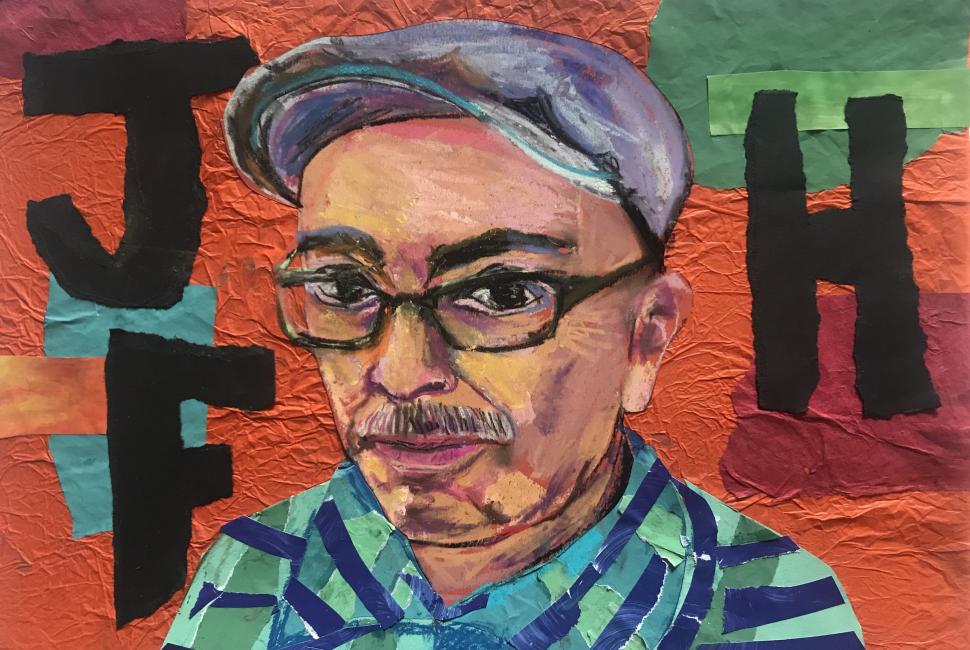
Image 1: Juan Felipe Herrera—Google images

Juan Felipe Herrera is the author of 187 Reasons Mexicanos Can’t Cross the Border. Before I picked up the book, I was not prepared for how the author is showing the reader that Mexicans are trying to find identity between two countries and along one border. This one border has caused Mexicans and Americans to label anyone who has brown skin with a racial identity. Here are a few lines from the eponymous poem— “187 Reasons Mexicanos Can’t Cross the Border (remix).”

Because our land grants are up for grabs

Because people are hanging milagros on the 2,000 miles of border wire

Because we need to pay a little extra fee to the Border

Because Mexican Human Rights sounds too Mexican

I choose these lines carefully because some of the lines were in Spanish and because these simple lines touched me. There are 187 reasons Herrera wrote about why Mexicans cannot cross the Mexican/U.S. border. Herrera is not trying to create anger or stir up resentment towards our fellow humans, but he is trying to show his readers the injustices that are continuing for the Mexican people. 

Picture1.jpg

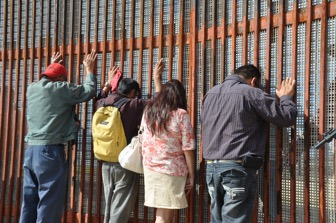
Image 2: Mexicanos looking through the border—Google images

The next poem I will share is called “Mexican Differences and Mexican Similarities.” The poem starts off with differences between Mexicans and Americans. 

You sit at the table we serve the table 

You dance on the floors we mop the floors

You sleep in hotel beds we make the hotel beds

You’ve got the law on your side we got history on ours 

You get the message this is the message 

You build border walls by the minute

Every minute we cross a thousand

Other lines from the same poem show how people are similar and not different: 

You have a family we have a familia 

You gotta problem with terrorism we gotta problem with terrorism

You wonder about the President we wonder about the President

You want more rights we want more rights 

You lost someone in the war we lost someone in the war

I could not help but realize that these thoughts are true. Mexicans who cross the border are willing to do anything and everything to change live in a better place even if that place treats them differently. As a little girl, my father owned his own company, and the only people he hired were Mexicans because, according to my father, he could pay them less and have them work longer hours. This is clearly unfair. It is unfortunate that my parents did not teach me or my siblings about the moral problems with inequality. However, I now see that Mexicans are no different from me in wanting a better life for our families. 

I think as human beings, we tend to forget that other human beings have the same values as we do. I know that for myself, sometimes I only look at the surface of people instead of looking past what I see right in front of me and really see that they are just like me. I chose the lines from the similarities to remind myself and the reader that Mexicanos have families. They have to deal with terrorism and losing a loved one in wars. I was especially touched when Herrera wrote that Mexicanos want more rights just as any human being would want more rights. 

I searched the internet to see what kind of rights Mexicans are losing. The biggest one, I found were that the police force was not taking more incentive of finding missing people in Mexico. Human Rights Watch reports, for instance, that “Since 2006, Mexico’s security forces have carried out widespread enforced disappearances” (https://www.hrw.org/world-report/2018/country-chapters/mexico).

Basic human rights being violated in Mexico include enforced disappearances, extrajudicial killings, military abuse and impunity, torture, criminal justice system, attacks on journalists and human rights defenders, women’s and girl’s rights, unaccompanied migrant children, sexual orientation and gender identity, and disability rights. It has amazed me how many human rights that we experience are being violated in Mexico. And, if you think about it, many of these rights are sometimes under attack in our own country as well.

The last poem I will share is called, “A Day Without a Mexican.” 

The march is holy

              We walk we                   float up

The hill from Broadway from 

               Spring street from Union Station

From Main to City Hall    without leaders

everyone everyone           alone       is a leader        woven

                everyone                                       is here

               between exile and homeland 

                          an exile without a name or a territory 

                                        a homeland that does not                                 exist

               we walk that is    all

at the center from all four directions red

I typed out how the poem looks on one page. I think it is important to show how the author intended the words to be written and how they fit on the page of a book. This poem describes how Mexicans north of the border feel exiled from their own country and in the country where they have tried to make a new life. In the last few lines of this part of the poem, I can see how Herrera has truly captured the struggle against and survival of injustices against the Mexican people. This book is not about blaming or making noise, it’s about celebrating those struggles and survivals—the fight is never-ending.

Works Cited

Herrera, Juan Felipe. 187 Reasons Mexicanos Can’t Cross the Border: Undocuments 1971-2007. City Lights, 2007.

Jasso, Carlos. “World Report 2018: Rights Trends in Mexico.” Human Rights Watch, 18 Jan. 2018, http://www.hrw.org/world-report/2018/country-chapters/mexico.