By the Lake of Sleeping Children: A Review
By Hayley Lopez
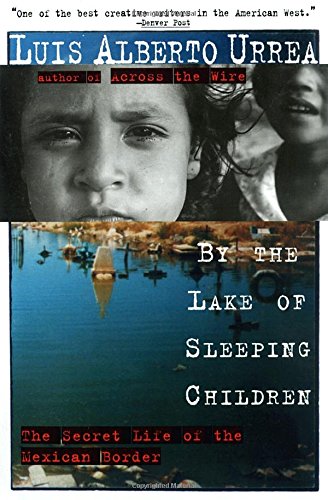
By the Lake of Sleeping Children starts when the author, Luis Alberto Urrea, is born as an American citizen near a Mexican drugstore in Tijuana. He describes himself having blue eyes and he spoke Spanish in his parents’ home before he spoke English. The author describes his father as a blond Mexican who was part of the secret-police force and also an army captain who held “a badge of the dreaded federal judicial branch of Mexican law enforcement” (3). The author’s mother is an American and was part of the red cross in WWII. The author describes how his mother went from white gloves to dirt streets and from Tiffany’s jewelry to contaminated medical instruments while having a cesarean-section delivery of the author. His father raised the boy to be 100% Mexican and also decided not to speak English with his son, and his mother raised him to be 100% American (4). The author explains how he has felt like the border between his two parents. He writes, “I have a barbed-wire fence neatly bisecting my heart” (4).
I was intrigued by how the author described his life as part citizen and part outsider. My husband is 1/4 Mexican and my last name is Lopez. I do not look Mexican, but many people tell me that I should not have changed my last name. When I need to talk to a representative on the phone, I am transferred to someone who speaks Spanish and broken English. I am frustrated most of the time. I cannot help but feel like I am half of an outsider as well because of my last name.
Urrea wanted to become a famous writer, but he spent most of his time on the Mexican and American border feeding the hungry and “bathing the feet of beggars” (4). The author tells the reader why Mexicans keep crossing the border into the United States—Money! It is because the United States has money to spend on the next new shiny car, taking trips to Disneyland, drinkingas much alcohol and eating as much food as anyone wants, and the people in the United States have freedom that Mexicans can only dream of. Urrea says that the United States represents for the whole world how to have fun and have lots of money to enjoy life (10). The author goes on about what all Americans have to enjoy, and he points out the what happens if they cannot get past the line: “if they don’t get in the gates, their babies might very well die of starvations, disease, or misadventure. What choice would you make?” (11). Now that I am pregnant with my first child, I know for a fact that I would do anything to make sure my unborn child is safe from any ailment. Parent instincts are very powerful to see that their offspring have a much better and fulfilling life than their own.
Once people start having babies, it is hard not to want a better life for them. Urrea goes on to tell the reader that the only thing Democrats and Republicans can agree on with third world countries is that if you cannot feed your baby, then you should stop having them. Urrea is very harsh in his explanation about how the absolute poorest Mexicans have no health insurance, no money, and no welfare. However, this does not prevent these deprived people from having children. Mexicans actually have more children because the children are insurance and social security. The children are who take care of them when the parents get older (13).
Urrea bluntly states that if the American government wanted no more immigration, then the border would be sealed tight as a jar of jam. Nevertheless, Americans do not want to spend outrageous prices for fruits and vegetables or clothing items (15). We are letting Mexicans come through the border into the United States because we do not want to work as hard as Mexicans do every single day. After reading just a few pages into By the Lake of Sleeping Children, I did not realize how selfish, greedy, and lazy Americans are with work. I am grateful for low prices on food while studying for my degree, but I wonder if I am willing to get down and dirty with hard labor.
Urrea claims that this is not a political book or a religious book or even a sociological text; he wrote this book by living and walking with the Mexicans on the border. He paints a shockingly vivid picture of what life is like for the old and the young. The constant struggle for survival to the next day. Urrea writes about the border for the voices who are not heard by Mexico or by the United States—he gives them a voice with his books, hoping that one day someone will want to learn about these peoples’ lives. He wants the readers to understand that this book will be hard to read. Urrea is just trying to show how poor these humans are.
Tijuana is the border city below South California. Urrea is astonished by how the city keeps throwing him surprises at every turn. The author somehow finds himself giving other people tours of the Mexicans’ poverty in Tijuana (37). “We go to some shacks, maybe stop at an orphanage or two, gobble fish tacos at Tacos El Paisano, then gird ourselves for the Tijuana dump. Everybody loves the dump—cameras fly out of purses, and wanderers walk into the trash, furtively glancing at me over their shoulders so they can be sure they’re not really in danger” (37).
I put down the book and wonder if I had ever gone somewhere and taken advantage of documenting someone’s else life knowing that I have it better than they will ever get to experience? Right now, I feel sick to my stomach by how people press their ugly faces into these poor people’s lives to validate tothemselves that they have it so much better than these poor humans.
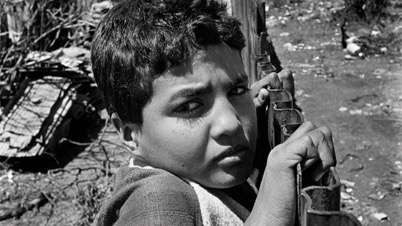
Figure 1: Google Images—Mexican boy looking over a fence.
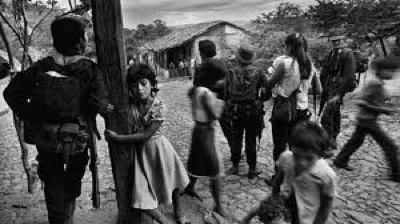
Figure 2: Google Images—Photographer Donna De Cesare spent decades amid brutal conflict, refugees, and violent gangs.
The author remembers taking his group of tourists to the lake of sleeping children, not really a lake but more of a pond. The smell seeps into the pores of his and the tourists’ skin. These sentences have frozen me to the core: “They were waking up. They were sitting up. The filthy water was cascading out of their eye sockets. They opened their mouths to call my names, and black water jetted out, like fountains. And, my God, they wanted to play with me” (38). I became physically sick at the words Urrea uses to describe the horror of these poor little human lives. I imagined these poor Mexican children are still wanting to have joy in their lives and pretend that life is better than this. I really am having a hard time reading this book, but I know that I am uneducated on how the Mexican’s lives are affected by their own country and by the United States.
Work Cited
Urrea, Luis Alberto. By the Lake of Sleeping Children. First Anchor Books Edition, 1997.

 Borderlands
This sounds like a really interesting and educating book. Your personal insights about your own experiences that relate to the book brings things into perspective as well. You stated that the author says that Mexicans come to the U.S. for money. That statement got me thinking. Many people want to come to the U.S. because the U.S. provides opportunities that you can’t really get anywhere else, including Mexico. I have been doing research of my own about the history of the border and how it came to be. Do you think that if the Mexicans of that time knew that their descendants were going to desire to be apart of the U.S. and live in this country that they would’ve given the land up freely? Do you think the Mexican-American War could’ve been avoided altogether?
LikeLiked by 1 person
I do not know if any of the Mexicans from the time of the Mexican-American War would understand that their country is in great turmoil because of the constant police and government abuse of power. I think that is a great question to consider is the Mexican-American War could have been avoided by selling the land to the U.S. and creating a better opportunity for all of the Mexican people so that there is no poverty like there is today.
LikeLiked by 1 person