187 Reasons Mexicanos Can’t Cross the Border: Review of a Book of Poetry
By Hayley Lopez
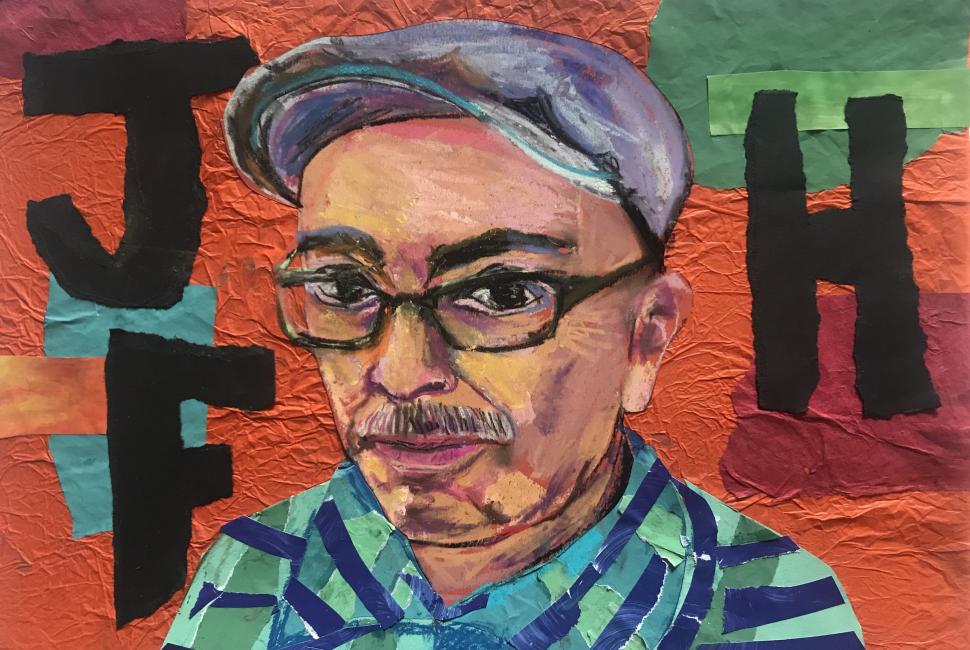
Image 1: Juan Felipe Herrera—Google images
Juan Felipe Herrera is the author of 187 Reasons Mexicanos Can’t Cross the Border. Before I picked up the book, I was not prepared for how the author is showing the reader that Mexicans are trying to find identity between two countries and along one border. This one border has caused Mexicans and Americans to label anyone who has brown skin with a racial identity. Here are a few lines from the eponymous poem— “187 Reasons Mexicanos Can’t Cross the Border (remix).”
Because our land grants are up for grabs
Because people are hanging milagros on the 2,000 miles of border wire
Because we need to pay a little extra fee to the Border
Because Mexican Human Rights sounds too Mexican
I choose these lines carefully because some of the lines were in Spanish and because these simple lines touched me. There are 187 reasons Herrera wrote about why Mexicans cannot cross the Mexican/U.S. border. Herrera is not trying to create anger or stir up resentment towards our fellow humans, but he is trying to show his readers the injustices that are continuing for the Mexican people.
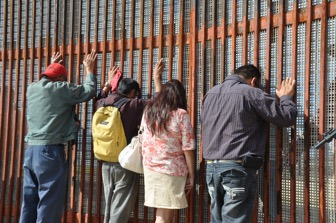
Image 2: Mexicanos looking through the border—Google images
The next poem I will share is called “Mexican Differences and Mexican Similarities.” The poem starts off with differences between Mexicans and Americans.
You sit at the table we serve the table
You dance on the floors we mop the floors
You sleep in hotel beds we make the hotel beds
You’ve got the law on your side we got history on ours
You get the message this is the message
You build border walls by the minute
Every minute we cross a thousand
Other lines from the same poem show how people are similar and not different:
You have a family we have a familia
You gotta problem with terrorism we gotta problem with terrorism
You wonder about the President we wonder about the President
You want more rights we want more rights
You lost someone in the war we lost someone in the war
I could not help but realize that these thoughts are true. Mexicans who cross the border are willing to do anything and everything to change live in a better place even if that place treats them differently. As a little girl, my father owned his own company, and the only people he hired were Mexicans because, according to my father, he could pay them less and have them work longer hours. This is clearly unfair. It is unfortunate that my parents did not teach me or my siblings about the moral problems with inequality. However, I now see that Mexicans are no different from me in wanting a better life for our families.
I think as human beings, we tend to forget that other human beings have the same values as we do. I know that for myself, sometimes I only look at the surface of people instead of looking past what I see right in front of me and really see that they are just like me. I chose the lines from the similarities to remind myself and the reader that Mexicanos have families. They have to deal with terrorism and losing a loved one in wars. I was especially touched when Herrera wrote that Mexicanos want more rights just as any human being would want more rights.
I searched the internet to see what kind of rights Mexicans are losing. The biggest one, I found were that the police force was not taking more incentive of finding missing people in Mexico. Human Rights Watch reports, for instance, that “Since 2006, Mexico’s security forces have carried out widespread enforced disappearances” (https://www.hrw.org/world-report/2018/country-chapters/mexico).
Basic human rights being violated in Mexico include enforced disappearances, extrajudicial killings, military abuse and impunity, torture, criminal justice system, attacks on journalists and human rights defenders, women’s and girl’s rights, unaccompanied migrant children, sexual orientation and gender identity, and disability rights. It has amazed me how many human rights that we experience are being violated in Mexico. And, if you think about it, many of these rights are sometimes under attack in our own country as well.
The last poem I will share is called, “A Day Without a Mexican.”
The march is holy
We walk we float up
The hill from Broadway from
Spring street from Union Station
From Main to City Hall without leaders
everyone everyone alone is a leader woven
everyone is here
between exile and homeland
an exile without a name or a territory
a homeland that does not exist
we walk that is all
at the center from all four directions red
I typed out how the poem looks on one page. I think it is important to show how the author intended the words to be written and how they fit on the page of a book. This poem describes how Mexicans north of the border feel exiled from their own country and in the country where they have tried to make a new life. In the last few lines of this part of the poem, I can see how Herrera has truly captured the struggle against and survival of injustices against the Mexican people. This book is not about blaming or making noise, it’s about celebrating those struggles and survivals—the fight is never-ending.
Works Cited
Herrera, Juan Felipe. 187 Reasons Mexicanos Can’t Cross the Border: Undocuments 1971-2007. City Lights, 2007.
Jasso, Carlos. “World Report 2018: Rights Trends in Mexico.” Human Rights Watch, 18 Jan. 2018, http://www.hrw.org/world-report/2018/country-chapters/mexico.

 Borderlands
Hayley,
This post was an excellent read. I really enjoyed to learn about Herrera’s book and his outlook on the struggles of Mexican people. It also really intrigued me that the author decided to not only include the differences between Mexicans and Americans, but also the similarities. I think that was an important aspect to have included in order to put his full point across without blaming anyone. Has he written any other books, and have you read them or want to?
Your personal insight on the subject also really gave your post an extra flare and relevance. What were your thoughts when you were a child when your father only used Mexicans for work? Did you understand the inequality then or did it come later in your life? Also, what would you do differently in your life now to change the Mexican inequality that is occuring?
The poem that you included was also really interesting. I find it admiring how the author formatted and displayed the writing. It gives the poem added description and meaning. I enjoyed the poem and all the other examples you included in your post. It is fascinating to read about the different ways people can portray aspects about the border.
LikeLiked by 1 person
Haley, I very much enjoyed reading through these poems and your insight on each. I have never been one to fully understand that form of art but you helped me view it in a different light. I especially enjoyed how you conveyed the format to help illustrate what the author was trying to portray.
LikeLike
Thanks a lot for your insight into human rights Haley. I was really interested to see all the similarities between what they want and what we want. It really is a shame that people take advantage of one another and really hurt each other. The book you mentioned,187 Reasons Mexicanos Can’t Cross the Border, is one I’m definitely going to have to read over the summer so I can become a little more informed. I look forward to learning more about how we can potentially aid in their protection of human rights. Thanks again for the piece Haley.
LikeLike